The people who opened the black box.
The expertise is not.
We are a small, dedicated group working on one question: how do you know whether enterprise software delivers the benefits it was built to create? The methods came out of four years of research. The practice came out of two decades of building the systems in question.
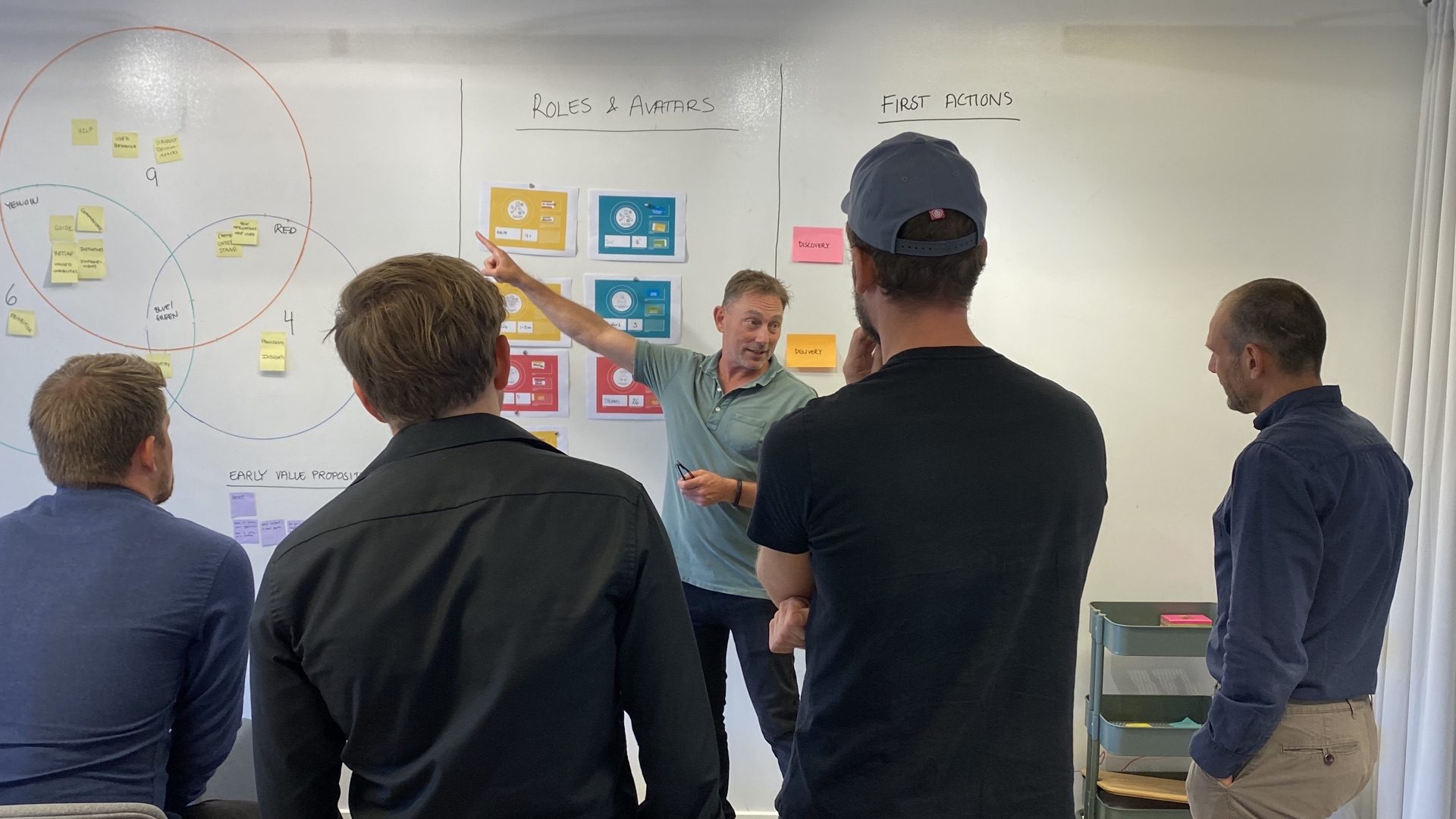
A world where teams know whether their products deliver.
“I imagine a world where most people who work with digital products know whether the solutions they build are delivering the benefits they were intended to deliver — and know how to make that happen. This is especially critical in mandatory use environments, where end users have no real alternative.
For me, the joy lies in finding every possible way to help move us closer to that. I have committed my career to doing exactly that.”
We want to bring people together to rethink the way we design for, measure, manage and evaluate the success of enterprise software — so organisations can maximise the value of what they have already invested.
A small group around one question.
These are the people you meet first. Behind them sits the network the work was built in: an Industrial PhD with the IT University of Copenhagen, five large enterprises that put the methods to the test, and the academic collaborators behind the published papers.
Thomas Ove Rasmussen
Thomas has spent more than two decades where enterprise technology, product design and business value meet — as design lead on global solutions, as lead architect on large-scale global initiatives, and as an entrepreneur — work that won an SAP Innovation Award in 2018. He founded Evonate, and has now pointed it entirely at the question he kept running into: how do we know whether enterprise software delivers the benefits it was built to create? He was the industrial adviser on the PhD that opened the black box, and he still teaches and facilitates product design.
Cecilie Caroline Falch
Cecilie is an adoption researcher and practitioner. She studies what actually happens after enterprise software goes live — the question most organisations answer with a dashboard: when people have to use a system, how do you tell system usage from meaningful adoption, and adoption from value? Her Industrial PhD, Designing for Adoption Management: Opening the Black Box of Mandatory Software Use, investigated exactly that. The collaboration began when Thomas was her industrial adviser, and it has continued ever since across research and selected projects.
None of it was invented for a website.
The models and instruments we work with came out of a four-year Industrial PhD, developed, validated and refined with five large enterprises. Parts of the work have been run inside large organisations — as research and transformation work, not as Evonate engagements. That is a distinction we would rather draw ourselves than have you find later.
Adoption work starts with agreeing what the words mean.
Our research taught us that meaningful adoption work begins with a shared understanding of the concepts involved. Clear definitions create that common ground — and help connect system use to the outcomes an organisation is actually after. Three of them are central to how we work.
“The use of an information system in a way that solves a given problem with a valuable outcome. Adoption involves aligning user behaviour, system functionality, and organisational intent.”
“The managerial effort to guide system use in ways that support business benefits. It includes influencing users, refining systems, and aligning tasks to ensure effective adoption.”
“The systematic capability to sense, interpret, and respond to the state of system adoption in ways that enhance alignment between system use, user behaviour, and business intent. It integrates data-driven insights, contextual understanding, and adaptive mechanisms to support ongoing adoption management and ensure the realisation of business benefits.”
Two surnames and a lighthouse.
FARO is built from its creators’ surnames. Their names are on it because it did not come from a product line or someone else’s framework: it came out of their own research, and they answer for it.
Appropriately, faro also means lighthouse in several languages — visibility and direction where usage metrics leave organisations navigating in the dark.